In a recent hindutva conservative thrashing, the bollywood legend Amitabh Bachan was criticized for meeting a Pakistan born British businessman, Anil Mussarat and his family. An RSS activist blamed without any evidence that Mussrat brothers have close connection with Pak Army, ISI or Prime Minister Imran Khan. Musarrat, on the other hand has connections and family relations with several bollywood stars for many decades.
It is important to see that the conservative hindutva RSS terrorists have no tolerance for any hindu meeting with any person with a Muslim name, even in 21st century, despite being involved in genocide of millions of Muslims in the Hindutva Republic in 8 decades.
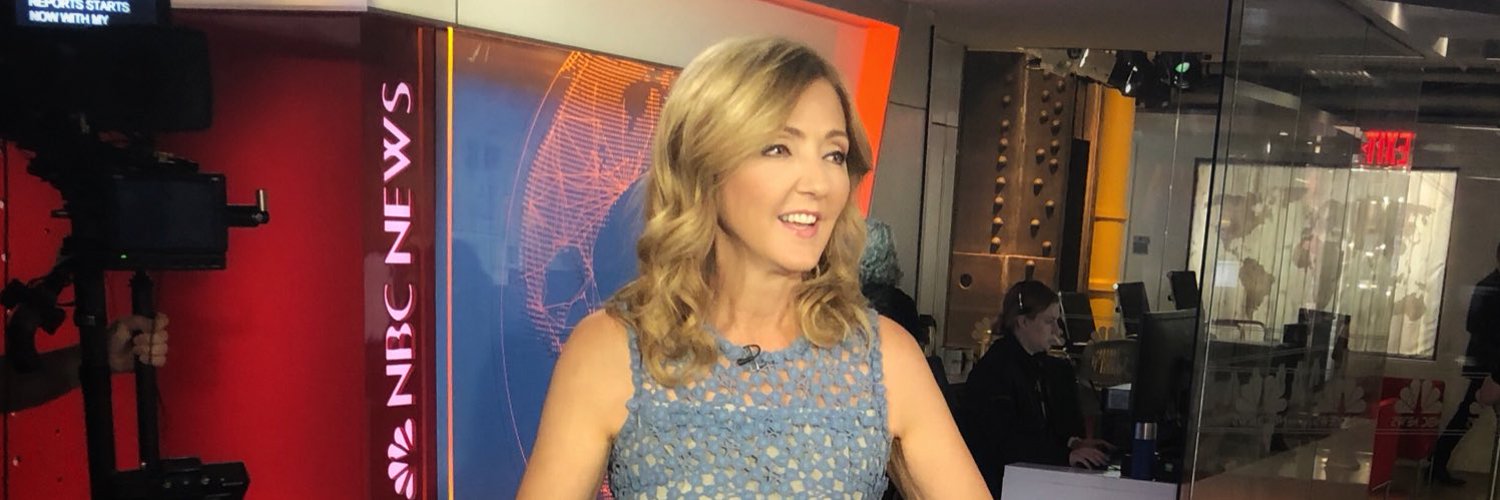
Just recently, Senior National Correspondent and anchor for MSNBC, Chris Jansing has expressed her views on latest plans of America and its impact on the global community and American nation.
Not sure how much more America can take. Fires, hurricanes, a devastating pandemic amid a bruising presidential fight – now what will surely be a vicious Supreme Court nomination. Not sure how much more anyone can take – mentally or emotionally.
However, she forgot to mention the two decades of of American butchering in Iraq, Afghanistan and middle east and support to hindutva in genocide of Muslims in India.
We #Americans for 19yrs Torture_Butcher MILLIONS in #Iraq#Afghanistan We Occupied. #USA#POTUS Gives $+Guns to Criminals in Both #OCCUPIED Countries. We Promote Civil-Wars in Both. We DESTROYED Aprox 60-MILLION HUMANS in Afghan+iraq. We Support #IndianArmy Terrorism in #Kashmir
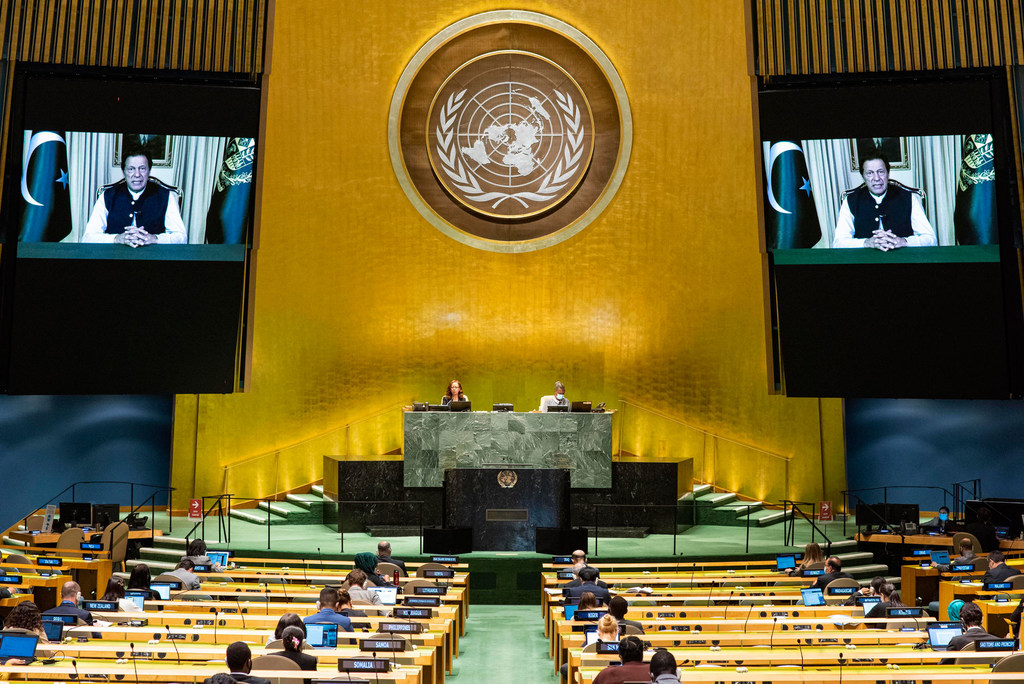
The driving force in international relations must be cooperation, in accordance with the principles of international law, and not confrontation, the Prime Minister of Pakistan told world leaders gathered virtually at the UN General Assembly.
In a pre-recorded video address to the Assembly’s annual high-level debate, Prime Minister Imran Khan, highlighted the importance of the 75th anniversary of the United Nations.
“This is also a time for us to reflect whether as the United Nations, we have been able to realize the promise we made collectively to our peoples,” he said.
Amid multifaceted threats to the foundations of the world order, the only way forward is through cooperation and not confrontation, he said, reaffirming his support for multilateralism.
Fighting the coronavirus pandemic
In his address, Prime Minister Khan informed the General Assembly of “smart lockdowns” employed by his country in its fight against COVID-19.
“We have not only managed to control the virus, stabilize our economy, but most importantly, we have been able to protect the poorest segment of our society from the worst fallouts of the lockdown,” he said, adding that in spite of the success, Pakistan is not out of the woods yet, like all other countries in the world.
He reminded the Assembly that with the “oneness” of humanity in an interconnected world, “no one is safe unless everyone is safe.”
Threat of climate change
Reiterating the threats posed by climate change, Prime Minister Khan called on world leaders to ensure that all commitments made in the Paris Agreement on Climate Change are fulfilled.
Pakistan’s contribution to carbon emissions is minimal, but it is one of the countries worst affected by the climate crisis, he said. As part of its efforts to mitigate the impact of climate change, his country will plant 10 billion trees over the next three years.
Attacks against Muslims
The Prime Minister voiced deep concern over rising religious hatred, increased nationalism and worsening global tensions, factors that have accentuated ‘Islamophobia’, resulting in attacks against Muslims in many countries.
He stressed that “wilful provocations” and “incitements to hate” must be universally outlawed, calling on the General Assembly to declare an “International Day to Combat Islamophobia.”
Prime Minister Khan accused India of State-sponsored Islamophobia, alleging that mosques have been destroyed, and at that Muslims have been killed and are at risk of losing their nationality due to discriminatory laws.
“Muslims were falsely blamed, vilified and victimized for spreading the coronavirus. They were denied medical attention and on many occasions, their businesses boycotted,” he said, noting that other religions are also at risk of being marginalized in India.
Peace in South Asia
Prime Minister Khan also underlined that for durable peace in the South Asian region, the Jammu and Kashmir dispute needs to be resolved, on the basis of international legitimacy.
“The Security Council must prevent a disastrous conflict and secure the implementation of its own resolutions as it did in the case of East Timor,” he said, calling on the body to take “appropriate enforcement actions.”
He also noted the Intra-Afghan negotiations, that commenced earlier this month, and said that early return of Afghan refugees, sheltering in Pakistan, must be part of the political solution.
Wrapping up his address, Prime Minister Khan called on the UN Secretary-General to take the lead in preventing global conflicts. To that end, he urged the convening summit-level meetings to address regional hot-spots and resolve outstanding disputes.
Full statement available here
UN Photo/Rick BajornasPrime Minister Imran Khan (on screen) of Pakistan addresses the general debate of the General Assembly’s seventy-fifth session.25 September 2020 UN Affairs
In a political cartoon circulating in social media, Imran Khan, the Prime Minister of Pakistan, is being asked to read the last line by President of China.
Interesting to know that the premier of Pakistan can talk at length on persecution of Muslims worldwide, but had never discussed the situation of Uyghur Muslims in China.
Greetings from UMMAA Broadcasting LLC, USA. Some of your below comments, it appears from TERRORIST/RSS-Hindutva/ILLITERATE Brahmans(probably from Brahmans Terrorist secret-agency/RAW inside Hindoostan/india)…YOU Folks have in our New Jersey, your Covert Terrorist-Org/VHP-USA…Ask THEM, to CALL Public Mtng with LIVE Press, & we shall be there, to DEBATE… Still, we do NOT know WHO You are, & where You all based & Which Govt-Org-NGO-Business/Intel-Agency/etc, YOU Really Represent..??..We welcome ALL Questions/comments of our esteemed readers. Please review the links below(google our Media-company name”UMMAA Broadcasting”; established in 2007 @ Rolla, Missouri, USA. Arshad Khan, UMMAA Broadcasting, Rolla, MO, USA … – Twitter twitter.com › arshad_usaThe latest Tweets from Arshad Khan, UMMAA Broadcasting, Rolla, MO, USA (@arshad_usa). JOURNALIST in MEMPHIS; Our WatsApp & 2Facebooks …UMMAA Broadcasting | American Media Organization … ummaabroadcasting.usUmmaa Broadcasting – March 2, 2021 0. #Canada Correct #UighurGenocide in #China#CCPChina Also #MuslimTwitter#MuslimLivesMatter GENOCIDES in …Rights · America · Asia · Europe
UMMAA BROADCASTING – Khan, Arshad A Trademark … uspto.report › … › Trademark Registration #87584053DICKEY, ERICA G.J.. Timeline. 2007-04-02, Date of First Use. 2017-08-25, Application Filed. 2018-11-27 …
Ummaa Broadcasting – YouTube www.youtube.com › channel › about … 1910 Madison Avenue, Memphis, TN – 38104 Emails: Ummaa@UmmaaBroadcasting.US, Ummaa@UmmaaBroadcasting.Org
From: Arshad Khan Date: Sun, Mar 7, 2021 at 7:36 PM Subject: 5-Mr.POPES, UMMAA Broadcasting & PASTOR …etc
WebMaster of UMMAA Broadcasting, LLC in Missouri: Pls ASAP issue BELOW email/complete, worldwide..Regards
Salams Mr…(Islamic Scholar, based middle-east):
Ref our telecoms, please review ALL below..Later, we shall discuss.
ISNA(Islamic Society of North America, in US & Canada) started approx 50yrs back, as Working-Class Muslim-students REAL-Organization(was called MSA: Muslim Students Association in USA/Canada)..BUT Sadly TODAY, ISNA has evolved into a Super-Rich BUSINESS(CONTROLLED by Filthy-RICH Muslims) & Dangerously, some of these RICH-Muslims are AGAINST The HUMAN-RIGHTS of MUSLIMS...THESE RICH-Muslims OBJECTIVE is, to KEEP MUSLIMS in USA/Canada & World-wide, as Perpetual-SLAVES of POWERFUL GOVTS/Dictators…Therefore, ALL Worldwide DICTATORS & Our US/Canada GOVTS, ofcourse SUPPORT(Politically-FINANCIALLY) ALL These RICH-MUSLIMS here.
THESE Few RICH-MUSLIMS in our USA, do NOT give DAMN, while Hundreds-of-Millions of MUSLIMS are RAPED-Butchered-TORTURED-Murdered, world-wide, in{Hindutva-India, Commy-CHINA, Budhist-Myanmar, RUSSIA, AFRICA, SriLANKA, THAILAND, Chechniya, Dagestan, Uzbekistan, KOSOVO, SERBIA,etc} & NOW FRANCE starting MUSLIM-SLAVERY there…while EU & UN & OIC, ALL DEAD… PS: 2500-MILLION MUSLIMS worldwide(Hindutva INDIA 400-MILLION; Commy-CHINA about 200-MILLION, etc.
The Few RICH-Muslims, also Command-CONTROL the Majority of MOSQUES in Our-USA, therefore These RICH-MUSLIMS also CONTROL ALL the IMAMS, in USA/Canada…These RICH-Muslims & Their Controlled-IMAMS, DO NOT ALLOW any-Discussion in MOSQUES, about the 24/7 GENOCIDES of World-wide MUSLIMS, & do NOT ALLOW DISCUSSION in MOSQUES, about the CURRENT Most-Serious Economic/Democratic/Real-LIFE PROBLEMS, of AMERICAN/Canadian MUSLIMS.
Please review below, Our Media-Challenge to the 5-Mr.POPES, & check HISTORICAL-Perspectives that we detailed.
Please reply & directly-Embed your responses, in-front of our below items.
Rgrds; Journalist Arshad A Khan(twitter @Arshad_USA );
>>>>Dear Mr/Pastor Thomas Mathai: Replying to your email/below.
Decades back, we asked ALL your 5 Mr.POPES(smart BUSINESS-MEN), few, simple Questions, in SIMPLE ENGLISH:-
A) The “HOLY-INJEEL”(its ORIGINAL LANGUAGE: ARAMIAC) was REVEALED to OUR Holy-PROPHET ” Hazrat EISSAH-Alehas-SALAM….WHY the 5 Mr.POPES NOT TELLING TRUTH, & WHYThe 5 Mr.POPES CHANGED NAME of ALMIGHTY GOD’s PROPHET, & of THE HOLY BOOK Revealed, as Holy INJEEL, Revealed in ARAMIAC…?
B) CAN Any of the 5 MR.POPES, PROVE with EVIDENCE(NOT King-JAMES STORIES, written in-ENGLISH, ONLY FEW HUNDRED Years BACK, & written-PUBLISHED in ENGLAND), that Our HOLY PROPHET ” Hazrat EISSAH-Alehas-SALAM”, STATED ever, that HIS NAME is JESUS CHRIST…?…& That Our HOLY PROPHET STATED ever, that HOLY INJEEL’s Name should be CHANGED to an ENGLISH NAME “BIBLE”…?
2) The 5 Mr.POPES, can immediately Resolve this(above -A & B), by TRUTHFULLY-SHOWING to the WORLD, the ORIGINAL HOLY INJEEL(in its ORIGINAL Language “ARAMIAC”), which is Preserved/KEPT by ALL These FIVE(5) Mr.POPES.
These five(5) Mr.POPES(who for 2000 YEARS, been FIGHTING among-themselves, for POWER & MONEY), are:
1) COPTICS Mr.POPE, based in CAIRO/EGYPT 2) GREEK Mr.POPE, based in ATHENS/GREECE 3) RUSSIAN Orthodox MR.POPE, based in MOSCOW 4) ITALIAN Mr.POPE, based in VATICAN-ROME 5) EASTERN ORTHODOX Mr.POPE, based somewhere in SERBIA(Old YUGOSLAVIA).
PS: These 5 MR.POPES, ALWAYS DEMAND Their FOLLOWERS, to ACCEPT the MR.POPE’s ORDERS, as The Final-ORDER from ALMIGHTY-GOD….Ofcourse, ALL DICTATORS, HISTORICALLY, have DEMANDED the SAME…TODAY, CHINA’s DICTATOR Mr XI, is DOING the SAME….
Also, Chinese-COMMY-DICTATOR/MR Xi, COMMITTING GENOCIDE-HOLOCAUST, of 200-MILLION MUSLIMS inside CHINA…& HINDUTVA-DICTATOR MODI-Rss-Bjp, Committing GENOCIDE of 400-MILLION MUSLIMS inside india…& Myanmar/Burma Dictator/MsAung-Su-Ki(she Supported/protected GENERALS) did MUSLIMS Genocide..etc
Dear Mr. MATHAI, Come down to EARTH…JUST Show ABOVE to your CHURCH-BOSS(whoever has been MILKING $$ from YOU, for ages)….
ALMIGHTY GOD, Revealed the HOLY INJEEL(in ARAMIAC) & SENT HOLY PROPHET “EISSAH-ALEHAS-SALAM” for HUMANITY, BUT These 5 Mr.POPES, have MADE a LUCRATIVE BUSINESS, with SONGS/Dances/incense/Show-Biz-DRESSES/JINGLES/etc/etc, & ONLY for THEIR PERSONAL-Orgs/DICTATORSHIPS/ PROPERTIES/Benefits…
NOTE-1: Our Holy PROPHET “EISSAH-ALEHAS-SALAM”, WAS Brutally-TORTURED(By JEWS) & The HOLY PROPHET was Just about to DIE, when ALMIGHTY GOD SAVED The HOLY PROPHET’s LIFE, by LIFTING him to The HEAVENS….
WE(“UMMAA Broadcasting” US-Company) shall DEBATE LIVE, with ALL 5 MR.POPES, in Wash-DC Press-Club, to DISCUSS OUR Press-Release(This email). Ask 5 Mr.POPES, to AGREE, to DEBATE LIVE.
Note-2: ALL NON-MUSLIMS(& ALL their CORPORATIONS) world-wide(including YOURSELF), BEG & CRAWL, to get Business/$$, from MUSLIM-Majority COUNTRIES,. & BEG TO LIVE-WORK THERE.
Rgrds; Journalist Arshad A Khan(twitter @Arshad_USA );
(since 2007: Media-member/Rolla Chamber of Commerce, Missouri-65401) MEMPHIS : PMP-120, 1910 Madison Ave, Memphis; TN-38104; & NASHVILLE : PO Box-428; The UPS-Store; 2441-Q, Old Fort Parkway, Murfreesboro, TN-37128; & Mail to HOUSTON(10122 Adobe Drive, HOUSTON, TX-77095; USA.
On Sat, Mar 27, 2021 at 9:05 AM JJ <j.jamshaid> wrote to UMMAABroadcasting@gmail.com: If such a population is unproductive & total Religion Crazy, high numbers of such a people means NOTHING.
Who Cares? Muslims are most unproductive & useless, due to their Progress & Economy killing Arab Religion, so their high numbers mean nothing. Jobless joining the more jobless.
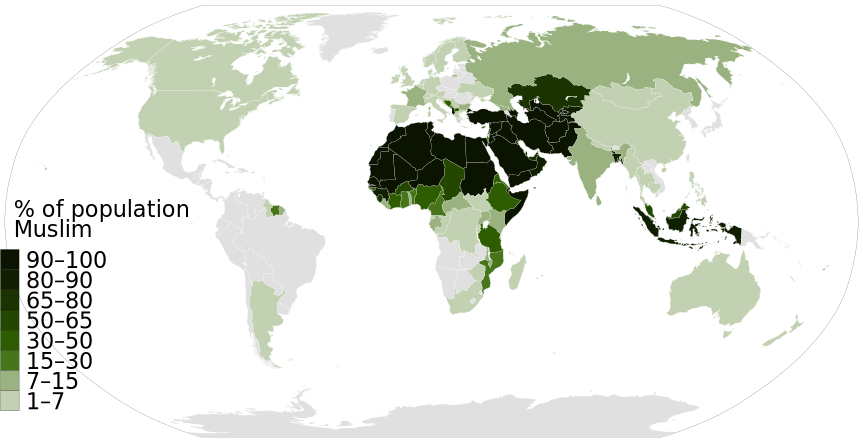
Muslim Population by Country 2021 – World Population Review worldpopulationreview.com › country-rankings › musli…There are approximately 1.9 billion Muslims globally, making Islam the second-largest religion in the world behind Christianity. The Islam population is mainly split … #UMMAABroadcasting position, at Above LIES{published by “google/wikipedia/internet/Pew/WashDC-NGO/United-Nations/World-Bank/etc”} (because, ISLAM is Largest RELIGON in world: “ALL” Other Beliefs-RELIGON:Catholic, COPTIC, Russian-Orthodox, Mennonites, Greek-OrthoDox, Baptist, MORMONS, Jehovahs-witness, JEWS, Lutheren, ALawites, Church-of-ENGLAND, Budhists, AGHA-KHANIs, Ahmadi-QADIANIS, PARSIS, Brahman-HINDUS(11% in INDIA), DAALITS(15% in INDIA) Communists(Worship-HUMANS), etc,, are “EACH”, LESS than “MUSLIMS population” worldwide.
Courtesy: Wikipedia
>>>>Fellow AMERICANS(330-Million) & Fellow MUSLIMS(2500-MILLION = 2.5 BILLION Muslims world-wide, below FACTS, TODAY:- 1) AFRICA: Population approx 1.5-BILLION, has about 70% MUSLIMS(ONE BILLION MUSLIMS in AFRICA).2) Terrorist RSS-Hindutva Controlled HindusTan/india, has about 400-MILLION MUSLIMS(Calculate from 1947-Onwards…per ALL in 1947(NEHRU, Gandhi, United Nations, UK, USA, CommonWealth, etc), MUSLIMS population inside INDIA was SAME, as in PAKISTAN then(1947: West-PAK & East-PAK/Now BANGLADESH)…TODAY, MUSLIMS in PAK+BanglaDesh, about 430-MILLION....indian-MUSLIMS have 2-4 children, whereas indian-Hindus have mostly 2 children.. 3) Commy-CHINA: atleast 18% MUSLIMS= about 200-MILLION MUSLIMS…internet SHOWS JEWS & HINDUS in Commy-CHINA about 14-MILLION Each & MUSLIMS about 30-MILLION(This a JOKE, because Jews & Hindus inside CHINA are PEA-NUTS, as Compared to MUSLIMS…in 627-AD, FIRST MOSQUE Built inside CHINA @ GUANGDON…About 35,000 MOSQUES TODAY, ALLOVER CHINA. 4) INDONESHIA: Approx 290-MILLION MUSLIMS 5) RUSSIA: About 18% MUSLIMS 6) TURKEY + IRAN + AFGHANISTAN + MALAYSIA + Middle-East + EU + UK + USA + CANADA + SOUTH-America + JAPAN + MYANMAR + SriLANKA + PHILLIPINES + THAILAND + AUSTRALIA+ NewZEALAND, + (Every COUNTRY on EARTH has MUSLIMS), have COMBINED, Atleast = 300-MILLION MUSLIMS Rgrds; Journalist Arshad A Khan(twitter @Arshad_USA ); member/Reporters-sans-Frontiers; google: “UMMAA Broadcasting”;{American Media Co: US-Govt Approved Trade-Mark, No: 6,143,794} ( www.UmmaaBroadcasting.US ; www.UmmaaBroadcasting.ORG ) ;(since 2007: Media-member/Rolla Chamber of Commerce, Missouri-65401)MEMPHIS : PMP-120, 1910 Madison Ave, Memphis; TN-38104; & NASHVILLE : PO Box-428; The UPS-Store; 2441-Q, Old Fort Parkway, Murfreesboro,TN-37128; & Mail to HOUSTON(10122 Adobe Drive, HOUSTON, TX-77095; USA.
Email addresses of the concerned friends and participants in discussion had been removed so as to avoid spam. In case you want to express your opinion on the subject, our comments section is always open.
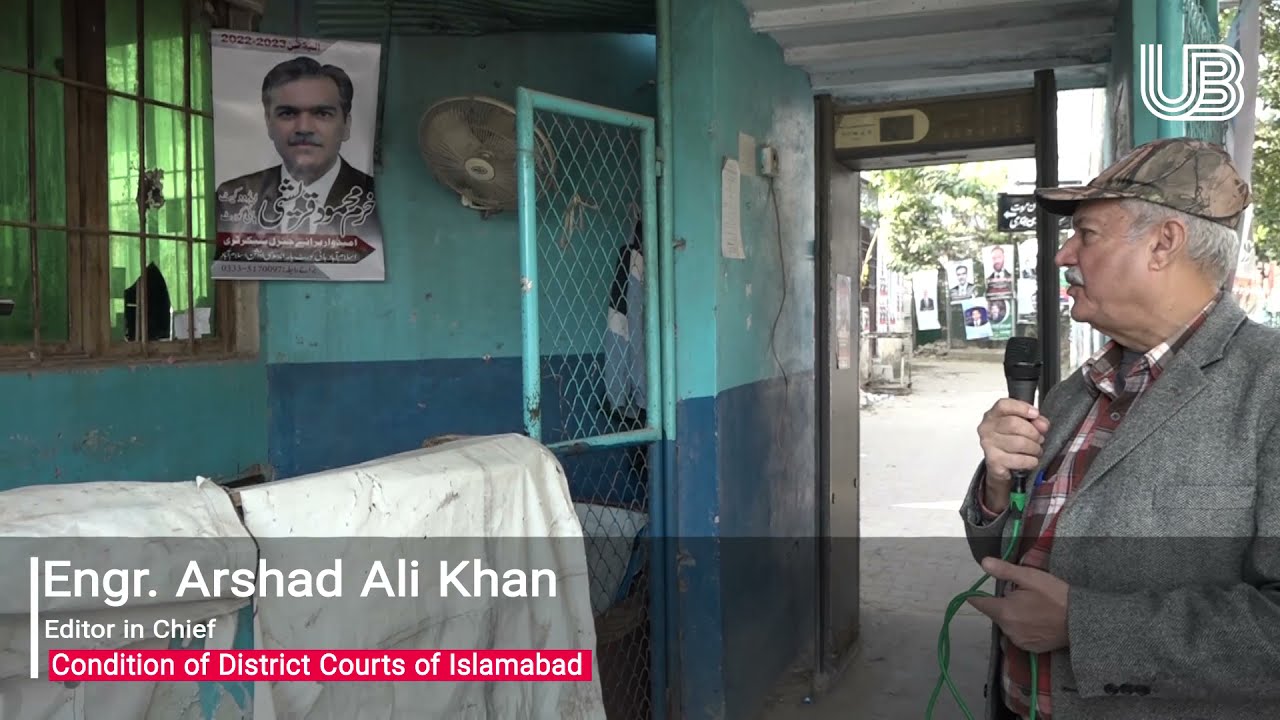
Horrible Conditions at the District Courts of Islamabad as seen from the video the broken streets are filled with mud and the security infrastructure is very compressible.
Talking with people on the streets of Islamabad about the political issues in Pakistan and watching Medicine Sans Frontières do nothing in times of disaster of floods in Pakistan.